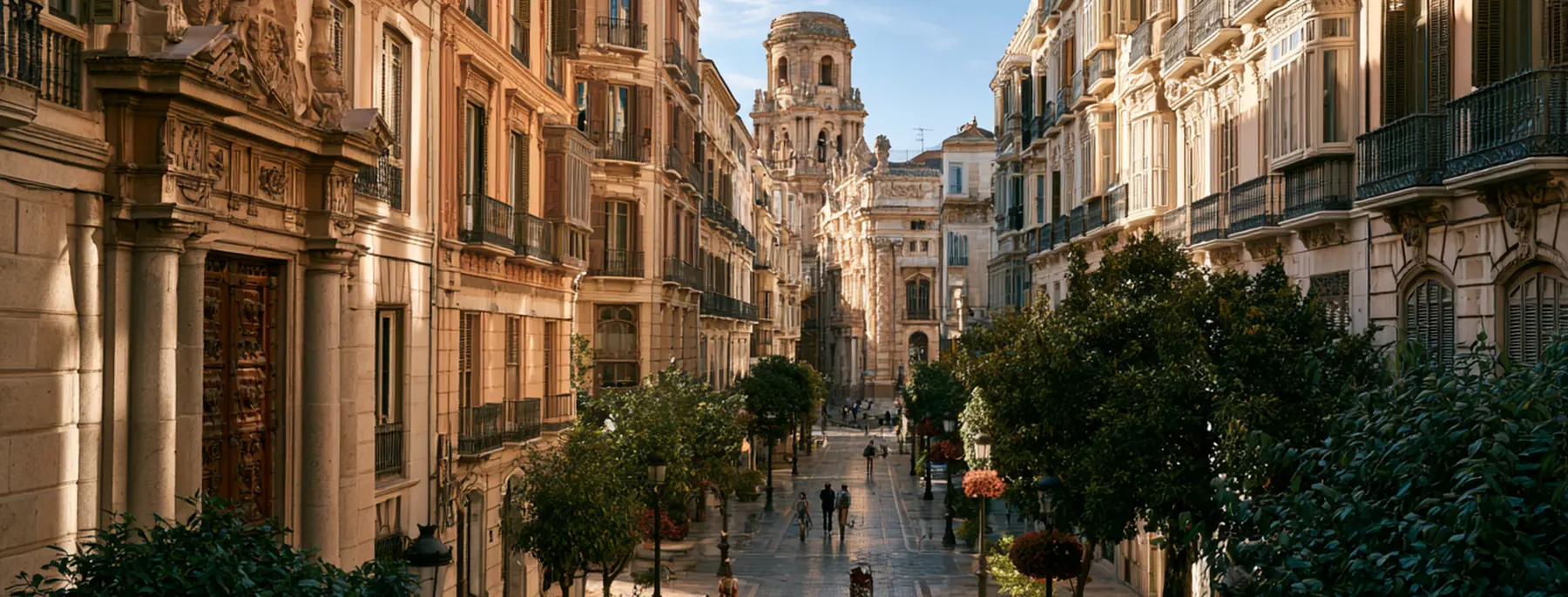
Why U.S. remote workers choose Málaga
Málaga has changed faster than any other Spanish city in the last five years. The arrival of Google’s cybersecurity center, Vodafone’s tech hub, and a growing cluster of startups and remote-first companies has brought infrastructure, talent, and a specific kind of energy to a city that was previously better known for being the gateway to the Costa del Sol beach resorts.
The weather argument is real: 320+ days of sun per year and average temperatures of 18°C (64°F) make it the warmest major city in Spain. The winters are genuinely mild, January averages 12°C (54°F) with sun. If you are leaving a cold U.S. winter and want to stop thinking about weather, Málaga solves that permanently.
The historic center (the Soho arts district, the cathedral, the Roman theatre, the Alcazaba) has been restored and is genuinely beautiful. The Picasso Museum is here; Málaga is his birthplace. The cultural scene has grown to match the economic development.

Neighborhoods to know
- Centro Histórico: The historic heart, narrow streets, the Cathedral, the Alcazaba, Calle Larios. Dense and beautiful. Rents have risen as it has gentrified. Best for people who want to be in the center of everything.
- Soho (Arte): Málaga’s arts district, just south of the center. Street art, independent galleries, creative businesses, good restaurants. The neighborhood that most feels like a mini-Barcelona-in-the-making. Growing fast.
- Limonar / Cerrado de Calderón: Residential, quieter, good schools, family-friendly. East of the center. Popular with families and longer-term residents who want space.
- Pedregalejo / El Palo: Coastal neighborhoods east of the center. Traditional fishing villages absorbed by the city. Beach access, local restaurants (chiringuitos), more relaxed pace. Good for people who want beach life without leaving the city.
- Teatinos: University area, west of center. Younger, cheaper, good connectivity. Less character but very affordable.
- Churriana / Campanillas: Outer neighborhoods near the airport. Much lower rents, suburban feel, good for people with families who want space. Car helpful but not essential.
Cost of living
Málaga is more affordable than Barcelona or Madrid, though rents have risen significantly as the city’s profile has grown. A realistic monthly budget:
- Rent (1BR, furnished, good neighborhood): €900–€1,400/month
- Groceries: €200–€320/month
- Dining out: €8–€13/lunch, €20–€40/dinner, some of the most affordable eating in any major Spanish city
- Transport: €40/month (metro + bus) or bike-accessible for much of the center
- Health insurance (DNV-qualifying): €75–€140/month
- Coworking desk: €90–€200/month
- Total estimate (comfortable single): €1,500–€2,100/month
Run your numbers
Gross-to-Net Salary Calculator
What your U.S. salary actually leaves in your pocket each month living in Spain.
Internet and coworking
Málaga has invested heavily in digital infrastructure. Fiber internet is available throughout the city (€25–€45/month). The coworking scene has exploded in line with the tech sector’s growth: The Cube, Málaga TechPark, Regus, and a growing number of independent spaces. The Málaga TechPark (Parque Tecnológico de Andalucía, or PTA), 15 minutes from the center, is a major hub for international tech companies and remote workers.
The weather — in detail
Málaga averages close to 3,000 hours of sunshine a year, among the sunniest of Spain’s large cities, and sunnier than most cities in Europe. Winters are exceptional: December and January are mild (12–16°C) and mostly sunny, with occasional rain. Summers are hot (30–36°C) but moderated by sea breezes and lower humidity than inland Spain. The beach is accessible year-round in a way that simply is not true of Barcelona or northern Spain.
Filing the Digital Nomad Visa from Málaga
Applications from Andalusia go to the same national unit as everyone else’s, the UGE, and the review timeline is the same, approximately 20 business days. Málaga has seen a rapid increase in Digital Nomad Visa applications as its profile has grown, and it is one of the cities people most often write to me from. The Schengen clock applies identically. File with adequate runway.
Is Málaga right for you?
Málaga works best for people who are genuinely motivated by climate, want lower costs than Barcelona or Madrid, and are comfortable in a city that is growing and changing fast, which means things are improving, but some infrastructure (public transport frequency, English-language services) still lags the larger cities. For families: the international school options are smaller than Barcelona or Madrid, but growing. For singles and couples optimizing for quality of life per euro in a sun-drenched setting, Málaga is arguably the best value in Spain right now.
The free assessment works for any Spanish city. If you tell me during your consultation that you are targeting Málaga, I will flag any specifics that apply to your file.
Last updated: 27 September 2026.