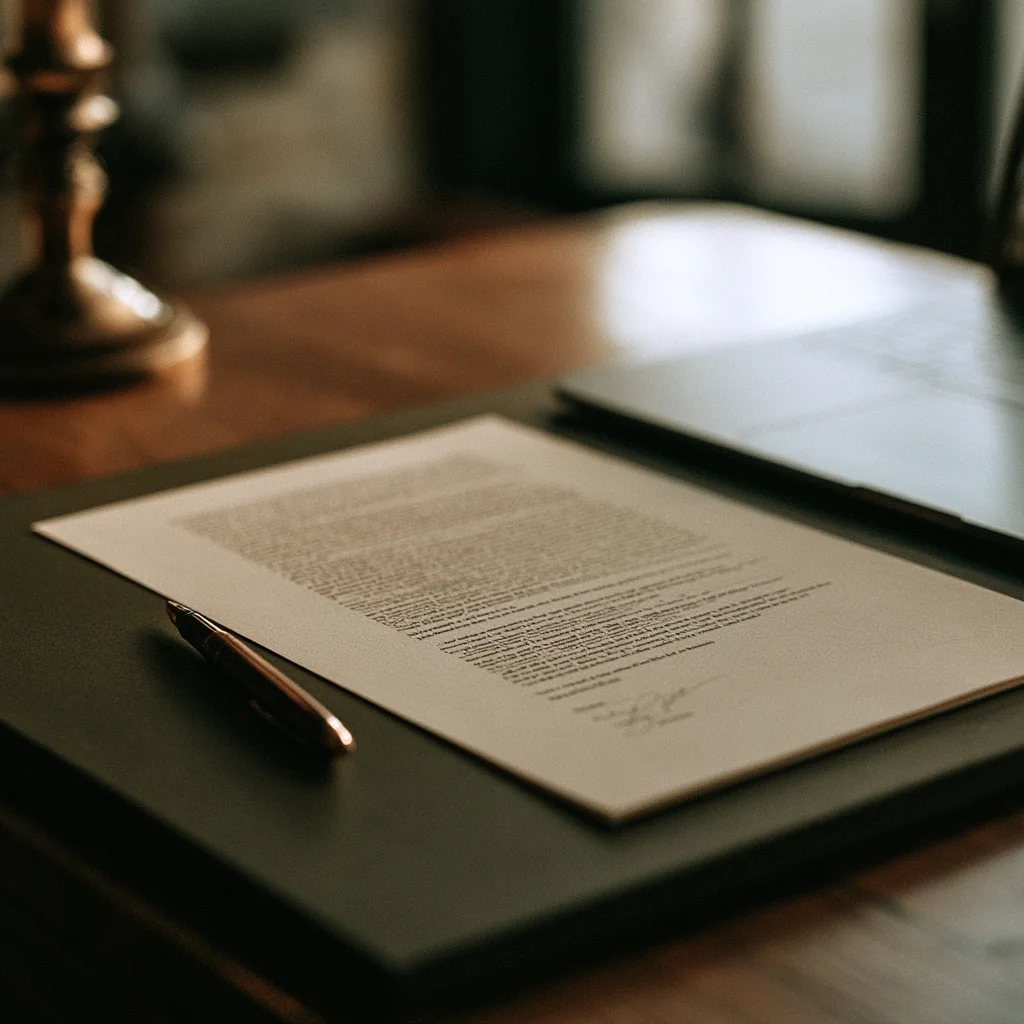
What the consulate looks for
One letter for each account you rely on, on the bank’s letterhead, signed by someone at the bank and dated. It must give five things.
- Your full name, as on your passport, and the account number.
- The date the account was opened.
- The average balance over the last twelve months.
- The balance on 31 December of last year.
- The current balance on the date of the letter.
New York and the other consulates that use BLS read the twelve-month average and the year-end figure first. A letter that gives only today’s balance is the usual reason a file comes back.
Keep the last three months of statements for the same account with the letter. They back it up, and the consulate asks for them separately. Nothing blacked out: the full account number, your name and your address.
The wording to take to your branch
Print this, or paste it into a message to your banker. The square brackets are for the bank to fill in.
RE: Account confirmation for [Customer Full Name]
To whom it may concern:
This letter confirms that [Customer Full Name], of [Home Address], holds the following account with [Bank Name]:
- Account type and number: [Checking / Savings / Money market], [full account number]
- Account holder(s): [Name(s) as on the account]
- Date opened: [MM/DD/YYYY]
- Average balance over the twelve months from [month, year] to [month, year]: USD [amount]
- Balance on December 31, [last year]: USD [amount]
- Balance on the date of this letter: USD [amount]
The account is in good standing.
Sincerely,
[Signature]
[Name of bank officer]
[Title]
[Phone and email]
Joint account with your spouse? Both names on the letter. A brokerage or money market account? The same letter from that firm, with the twelve-month average of the account value, plus your latest statement.
Before you ask for the final version, you can paste the bank’s draft into the free bank letter check. Your browser flags what is missing at once, and I read it within 24 hours.
When to ask for it
In the last weeks before your appointment. The letter has to be current on the day, and the consulate reads the twelve-month average up to the month it was issued. A letter from three months earlier leaves a gap the statements then have to explain.
Leave a week for the sworn translation after you get it. The checklist tool puts the bank letter, the statements and the translation on your calendar, counted back from your appointment.
How much the letter has to show
In 2026 the line is €28,800 a year for you and €7,200 for each family member, from savings, passive income or both. If your Social Security or pension carries part of it, the bank letter only has to cover the rest.
The consulates publish the line in dollars, about $32,000 for one person, but the file is read in euros. Build it to the euro line with a margin, so a weaker dollar on the day does not leave you short. I prepare every file at least 15% above the line. The means calculator does the sum, and the proof of funds guide covers the other money papers.
Three things that make a letter read badly
A large deposit in the last months. The average shows it, and so do the statements. If you are consolidating savings for the visa, do it a year ahead if you can. If you cannot, bring the letter from the account the money came from as well, so the history is visible.
Salary deposits. The Non-Lucrative Visa does not allow work. Statements that still show payroll a month before the appointment invite the question of whether the job has really ended. If you have just retired, bring the proof that the job ended with the rest of the file.
Accounts in someone else’s name. Money held by a child or a trust is not your means unless you can reach it. Ask me before you rely on it.
The translation
For the Non-Lucrative Visa the bank letter goes with a sworn translation into Spanish, by a translator on the Spanish Foreign Ministry’s register. The statements usually need only the key pages translated. Each consulate keeps its own list, so check yours on its consulate page.
The Digital Nomad Visa filed in Spain is different. There the bank evidence is a stamped certificate of three months of salary movements, and it is not translated. The nomad visa bank certificate guide covers that one.
Your name, the account number, the date the account was opened, the average balance over the last twelve months and the balance on 31 December of last year, on bank letterhead, signed by a bank officer and dated.
No. Consulates ask for both: a letter that states the average and the year-end balance, and the last three months of statements for every account you rely on. The statements back the letter up.
Yes, for the Non-Lucrative Visa. It goes with a sworn translation into Spanish by a translator on the Spanish Foreign Ministry’s register. That differs from the Digital Nomad Visa filed in Spain, where bank certificates are not translated.
Ask a different department, usually the branch manager or a private banking desk, with the wording on this page. If the bank truly cannot, the statements for twelve months can show the average, and I tell you how to present them for your consulate.
It can. The letter shows a twelve-month average, so money moved in last month barely lifts it and draws questions about where it came from. Move savings into the account you will use well before you apply, or bring the account it came from as well.
Sources: Reglamento de Extranjería, RD 1155/2024 (BOE) · Consulate General in New York, non-lucrative residence visa · Every figure on this site, with its source.