
Why U.S. remote workers choose Barcelona
Barcelona has a strong international infrastructure that makes the transition from the U.S. easier than most Spanish cities. There are international schools with English-language programs, English-speaking medical professionals, a large community of American and British expats, and neighborhoods where you can build a full daily life without being fluent in Spanish from day one, though you will want to learn.
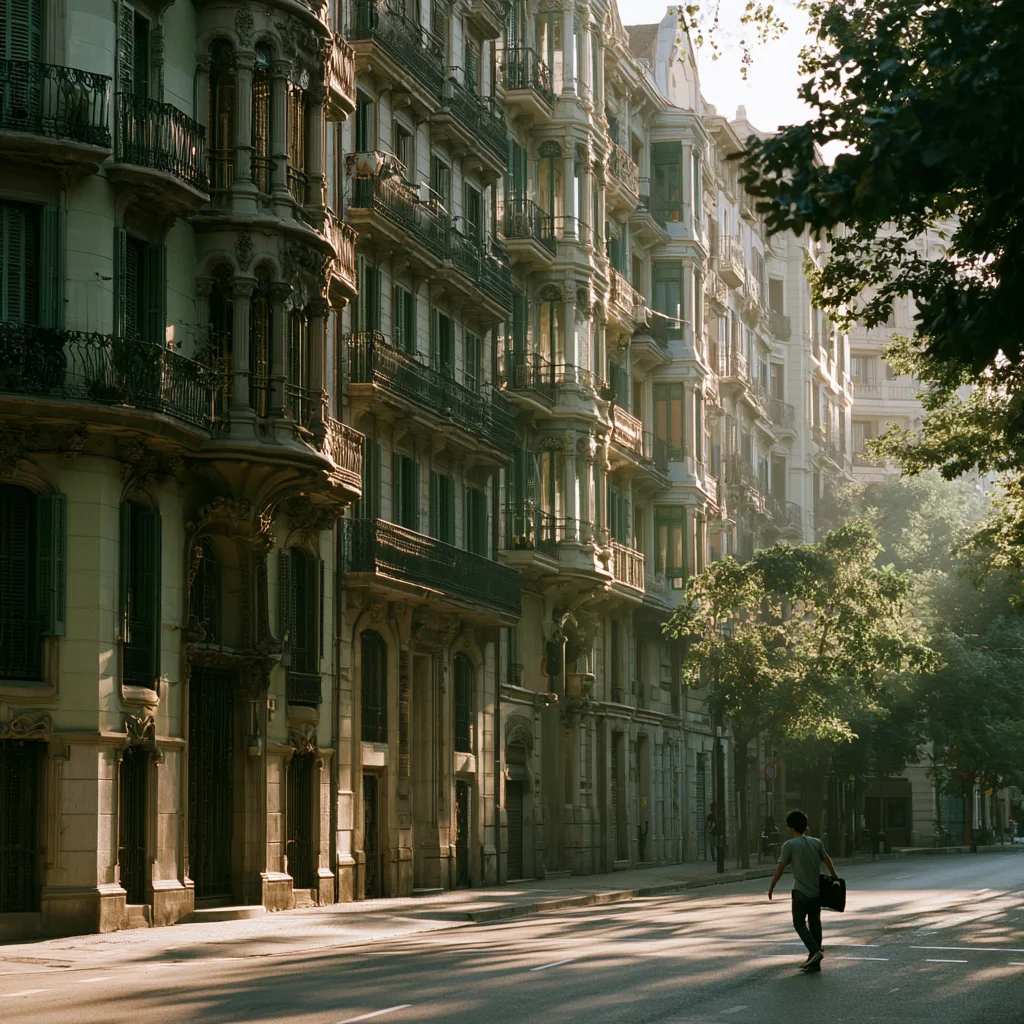
The city is architecturally exceptional and unusually walkable for its size. The metro system is reliable and extensive. The beach is 20 minutes from the city center by public transport. The quality of food (markets, restaurants, neighborhood bars) is consistently high across all price points.
Neighborhoods to know
Eixample
Central / Well-connectedThe grid neighborhood that defines central Barcelona. Wide boulevards, excellent transit, walkable to everything. Most popular expat choice. Rents are high.
€1,400–€2,000 / monthGràcia
Village feel / CreativeVillage-within-the-city feel. Slightly cheaper than Eixample, strong local community. Popular with creative professionals and families. Good schools nearby.
€1,200–€1,700 / monthEl Born
Historic / LivelyDense, historic, beautiful. Small apartments but extraordinary location. High tourist traffic. Better for singles than families. Premium on location.
€1,400–€2,000 / monthPoblenou / 22@
Tech / InnovationBarcelona’s tech and innovation district. Coworking spaces everywhere, younger demographic, slightly lower rents than central. The choice for people wanting to be near other remote workers.
€1,100–€1,600 / monthSant Martí
Coastal / LocalCoastal, more local feel, emerging neighborhood. Lower rents, beach access, improving infrastructure. Good balance of price and location.
€1,000–€1,500 / monthSarrià-Sant Gervasi
Upscale / FamilyQuieter, more residential, higher ground above the city. Popular with families who want space and better air. International schools nearby. Higher rents, quieter life.
€1,500–€2,500 / monthHorta-Guinardó
Local / ValueA genuine local neighborhood above the tourist belt. Lower rents, strong community character. Good metro connections to the center. Families find excellent value here.
€900–€1,400 / month
Cost of living
Barcelona is the most expensive city in Spain, but still significantly cheaper than London, Paris, or major U.S. metros. A realistic monthly budget for a single remote worker living comfortably:
- Rent (1BR, furnished, decent neighborhood): €1,200–€1,800/month
- Groceries: €250–€400/month (Mercadona, Lidl, local markets)
- Dining out: €10–€20/lunch (menú del día), €30–€60/dinner
- Transport (metro monthly pass): ~€45/month
- Health insurance (DNV-qualifying): €80–€150/month
- Coworking desk: €150–€300/month
- Total estimate (comfortable single): €2,200–€3,000/month
Families should budget significantly more: a 2–3 bedroom apartment runs €2,000–€3,500/month in most expat-friendly neighborhoods.
Run your numbers
Gross-to-Net Salary Calculator
What your U.S. salary actually leaves in your pocket each month living in Spain.
The Catalan language question
Barcelona is bilingual: Spanish and Catalan are both official. In practice, most daily interactions happen in either language seamlessly. You speak Spanish, you are understood and answered. For children, public schools teach primarily in Catalan, with Spanish as a subject. If Spanish-language schooling is a priority, international or private schools are the reliable path. This is worth thinking through before choosing Barcelona versus Madrid or Valencia, where the public system is Spanish-first.
Housing market dynamics
Barcelona’s rental market is competitive and prices have risen significantly. Key practical points:
- Most landlords require proof of income, first + last month + deposit (often 2 months)
- Furnished apartments are common and practical for arrivals without shipped furniture
- Start your search 4–6 weeks before your intended move-in; prime listings go fast
- Idealista and Fotocasa are the main listing platforms; Spotahome for furnished short-term options
- Having your TIE and proof of income as a DNV holder helps significantly with landlords
Wondering whether to buy instead? The trade-offs for visa holders are covered in renting vs. buying on the DNV.
Filing the Digital Nomad Visa from Barcelona
If you are applying from inside Spain while living in Catalonia, your application goes to the same national unit as everyone else’s, the UGE. Same documents, same ~20 business day timeline.
If you are already in Barcelona on tourist status, the same 90-day Schengen clock applies. If you have time, filing from Barcelona gives you the 3-year permit from day one.
Is Barcelona right for you?
Barcelona works best for people who want a genuinely international city, can absorb higher rents, and are excited about a bilingual environment. For families who want English-language international schools and a large expat network, it is one of the top choices in Europe. For singles or couples who want lower costs and a more immersive Spanish experience, Valencia and Málaga deserve serious consideration.
City choice does not affect your visa eligibility. Start with the free assessment regardless of where you plan to land.