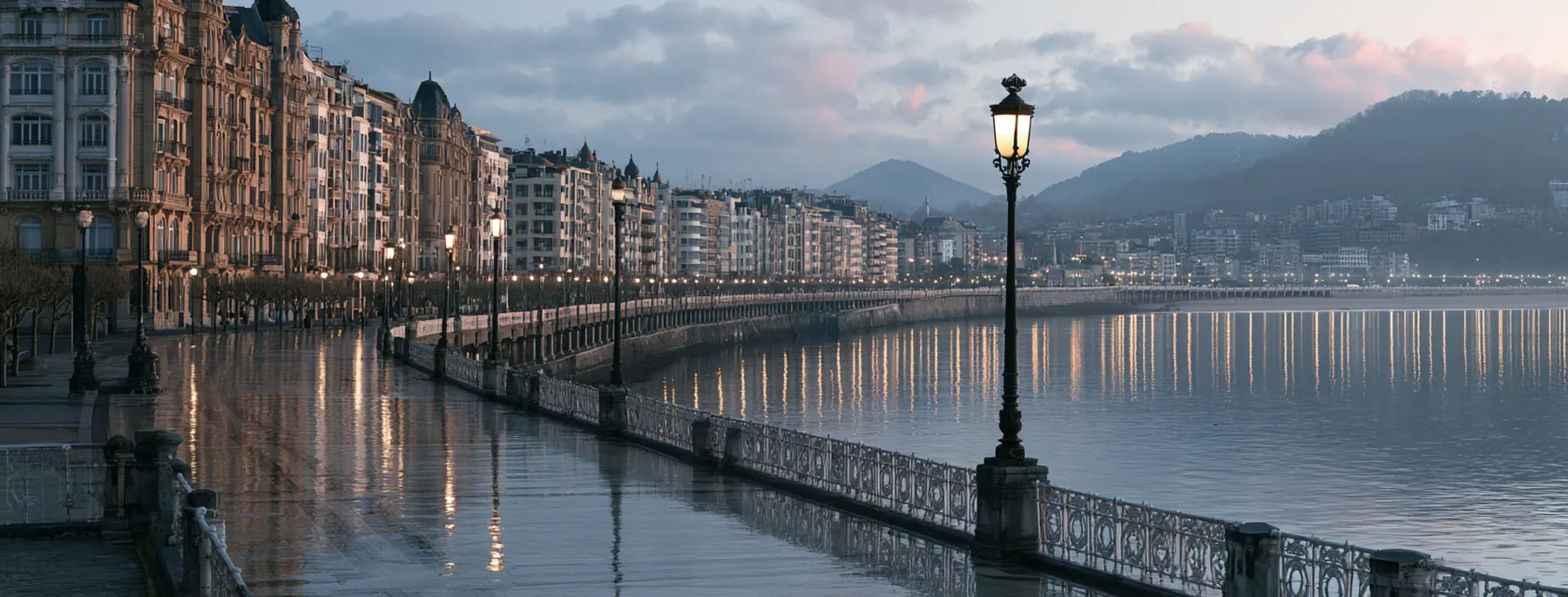
Why U.S. remote workers choose San Sebastián
People who choose San Sebastián almost always do so for the same reasons: the food, the bay, the scale, and the quality of daily life. The city is small enough to walk everywhere: the old town (Parte Vieja), the beach (La Concha), the residential neighborhoods, the market, in a city that has clearly decided to be excellent rather than large.
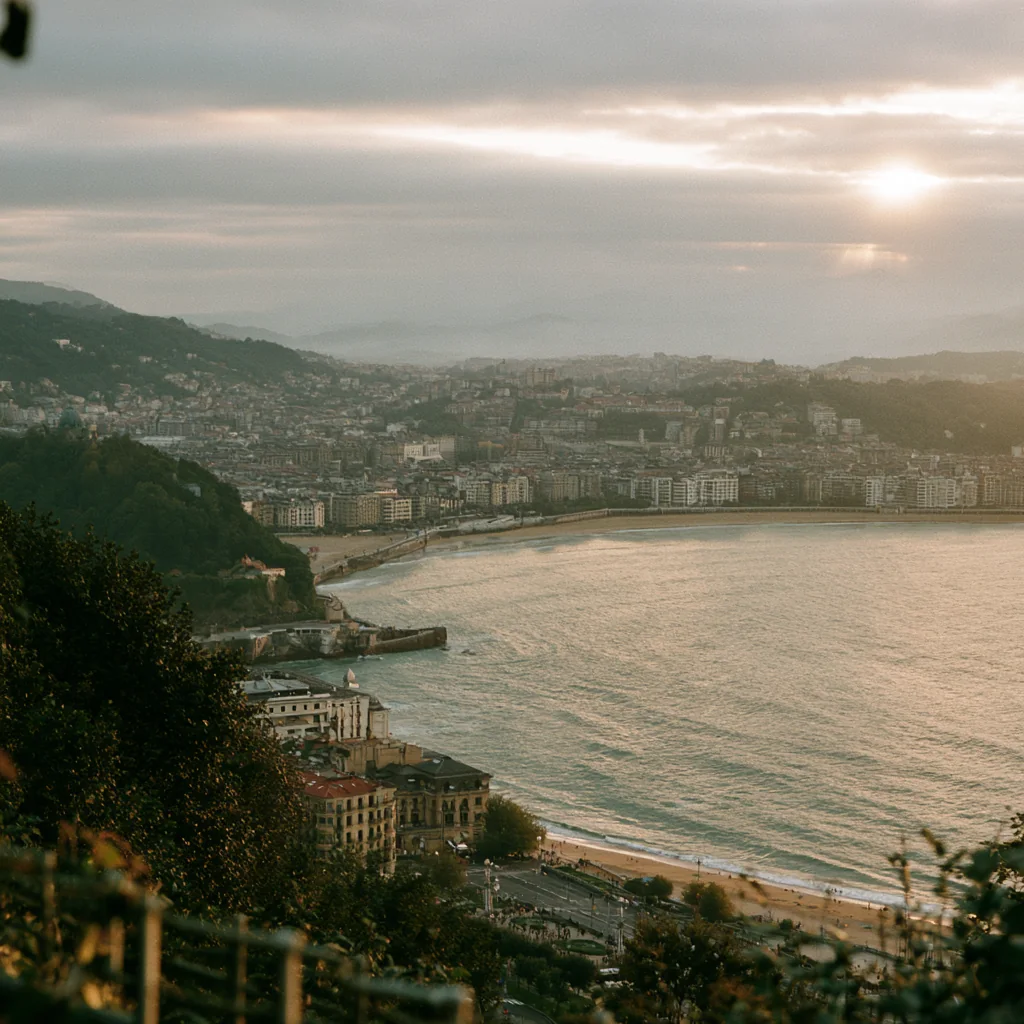
The pintxos culture in San Sebastián is world-famous for a reason. The concentration of serious cooking per square kilometer is hard to overstate, not just the Michelin-starred restaurants, which exist, but the neighborhood bars serving €2.50 pintxos that would be celebrated in any other city. If food matters to you as part of daily life, no city in Spain competes with this.
For remote workers specifically: San Sebastián’s size means you build a social network quickly, the city is walkable enough that a car is unnecessary, and the Atlantic climate (mild summers, cool winters, frequent rain) suits people who find Mediterranean heat uncomfortable. It does not suit people who moved to Spain for sun.
The size question
San Sebastián’s greatest appeal (its human scale, its walkability, its intimacy) is also its primary practical limitation. With 190,000 residents, it is a small city. This has real consequences for Digital Nomad Visa holders:
- Specialist services: English-speaking doctors, dual-qualified tax advisors, international schools, and specialist professionals are significantly less available than in Madrid or Barcelona
- Coworking: Limited options compared to larger cities, a handful of spaces, rather than dozens
- Rental supply: A small market means less availability and less choice; rents are high relative to the city’s size because supply is constrained
- Expat community: Smaller and predominantly European (French, in particular) rather than American
None of these are disqualifying (many people live excellent lives in San Sebastián as remote workers) but they require more self-sufficiency than Madrid or Barcelona would.
Neighborhoods to know
- Parte Vieja (Old Town): The historic center, famous for its pintxos bars, narrow streets, and the church. Beautiful but dense, loud at night, and small apartments. Better for visiting than living.
- Gros: Across the Urumea river from the Old Town. Younger, more residential, the favorite of locals who want to live in the city without the tourist density. Good food scene, beach access (Zurriola, the surfers' beach), reasonable rents relative to San Sebastián standards.
- Centro / Amara: The commercial heart of the city. Practical, well-connected, less scenic than Gros or Parte Vieja, but good for daily life. Families find the school access easier here.
- Ondarreta / Miraconcha: West of La Concha beach, residential, elegant, expensive. Popular with families who want the best of the bay without the Old Town density.
- Antiguo / Igeldo: Quieter residential areas further from the center. Lower rents, more space, less scenic. Good for families who prioritize space over location.
Cost of living
San Sebastián is expensive, comparable to Barcelona and Madrid, expensive for a city its size. The combination of high rents, high food costs, and limited competition among landlords makes it one of the costlier choices for DNV holders. A realistic monthly budget for a single remote worker:
- Rent (1BR, furnished, good neighborhood): €1,000–€1,600/month
- Groceries: €280–€400/month (Eroski, local markets, the Bretxa market is excellent)
- Dining out: €10–€18/pintxos lunch, €40–€70/dinner at a restaurant
- Transport (bus/tram): ~€30/month
- Health insurance (DNV-qualifying): €80–€150/month
- Total estimate (comfortable single): €2,000–€2,900/month
This makes San Sebastián comparable in cost to Barcelona, which offers far more urban infrastructure. The premium you pay is for quality of life that money can buy in few places: the bay, the food, the scale, the safety.
Run your numbers
Gross-to-Net Salary Calculator
What your U.S. salary actually leaves in your pocket each month living in Spain.
The Basque tax framework
San Sebastián is in Gipuzkoa (Guipúzcoa), one of the three Basque provinces, each of which has its own Hacienda Foral. The Hacienda Foral de Gipuzkoa administers income tax for residents of San Sebastián, not the national AEAT. Tax rates, forms, and some procedures differ from the national system. The state Beckham Law does not apply here. Gipuzkoa has its own regime for people who move in (Régimen Especial de trabajadores desplazados), which works differently from the flat 24%.
When engaging a gestor in San Sebastián, confirm they are experienced with Hacienda Foral de Gipuzkoa specifically. This is a meaningful difference from the rest of Spain, not prohibitively complex, but requiring a professional who knows the local system.
International schools
San Sebastián’s international school options are limited by the city’s size. The Colegio Internacional Lauro (in the metro area) and some bilingual private schools exist, but the choice is significantly narrower than Barcelona or Madrid. The French presence in the city means some families use the French lycée. Public schools offer Spanish-medium, Basque-medium, and bilingual models. For families who require English-language international schooling specifically, confirm availability and waitlist status well before committing to San Sebastián.
Filing the Digital Nomad Visa from San Sebastián
Applications from residents of Gipuzkoa, where San Sebastián is, go to the same national unit as everyone else’s, the UGE. The documents and timeline are identical to any in-Spain application.
Is San Sebastián right for you?
San Sebastián is right for people who value quality of daily life above all else, are comfortable being in a small city without a large English-speaking expat community, can afford its costs, and are genuinely excited about Basque culture rather than just tolerant of it. It is wrong for people who want urban scale, diverse professional services, abundant coworking, large international school choice, or a budget-efficient base.
For people who fit the first description, very few places in Europe rival it.
Last updated: 27 September 2026.