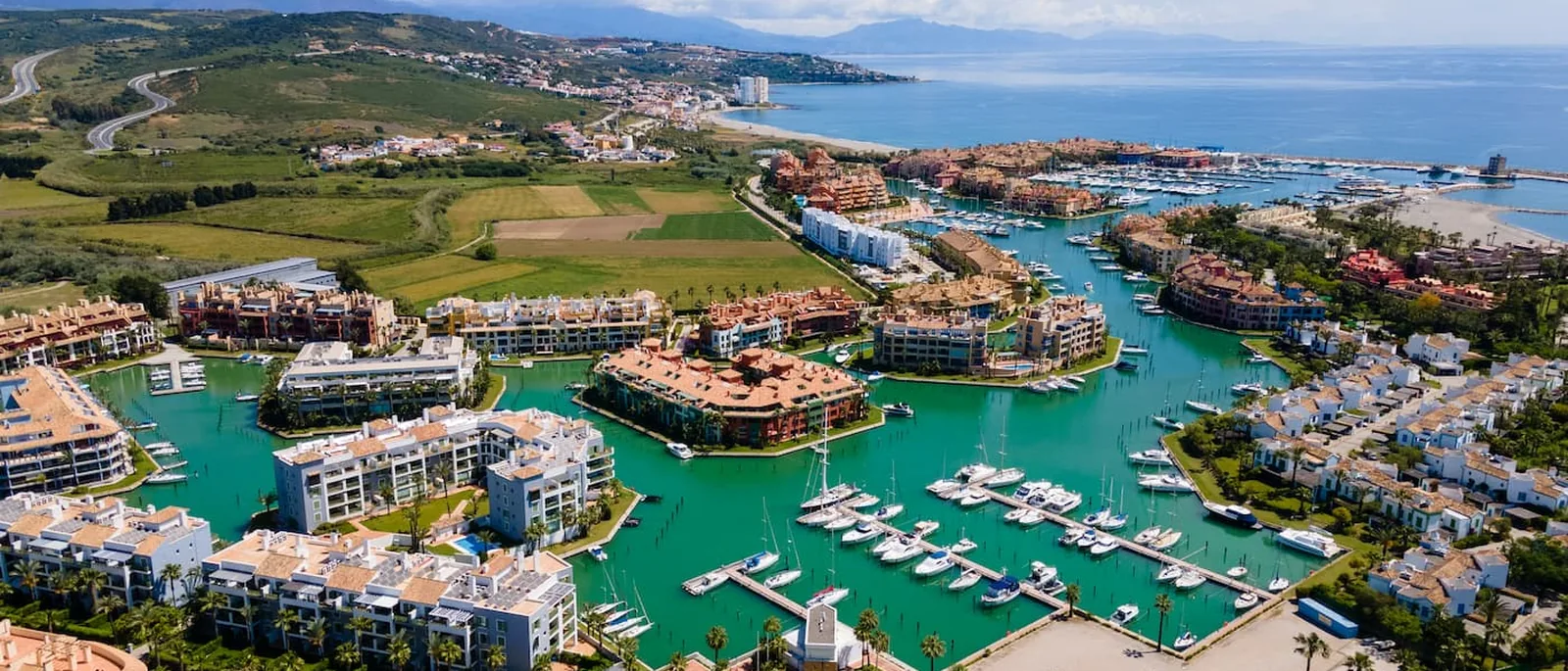
What Sotogrande actually is
Sotogrande was developed from the 1960s onward as a private residential estate, a concept imported from the American country club tradition. It is not incorporated as its own municipality; it sits within the ayuntamiento of San Roque, a working Spanish town 10 minutes inland. The estate itself is organized around a series of clubs and amenities: the Real Club de Golf Sotogrande (one of Spain’s oldest and most respected courses), the Santa María Polo Club (which hosts the Copa de la Reina and is one of the most prestigious polo venues in Europe), the La Reserva Club with its inland beach and racquet facilities, and Port Sotogrande, a marina with restaurants, apartments, and a permanent waterfront community.
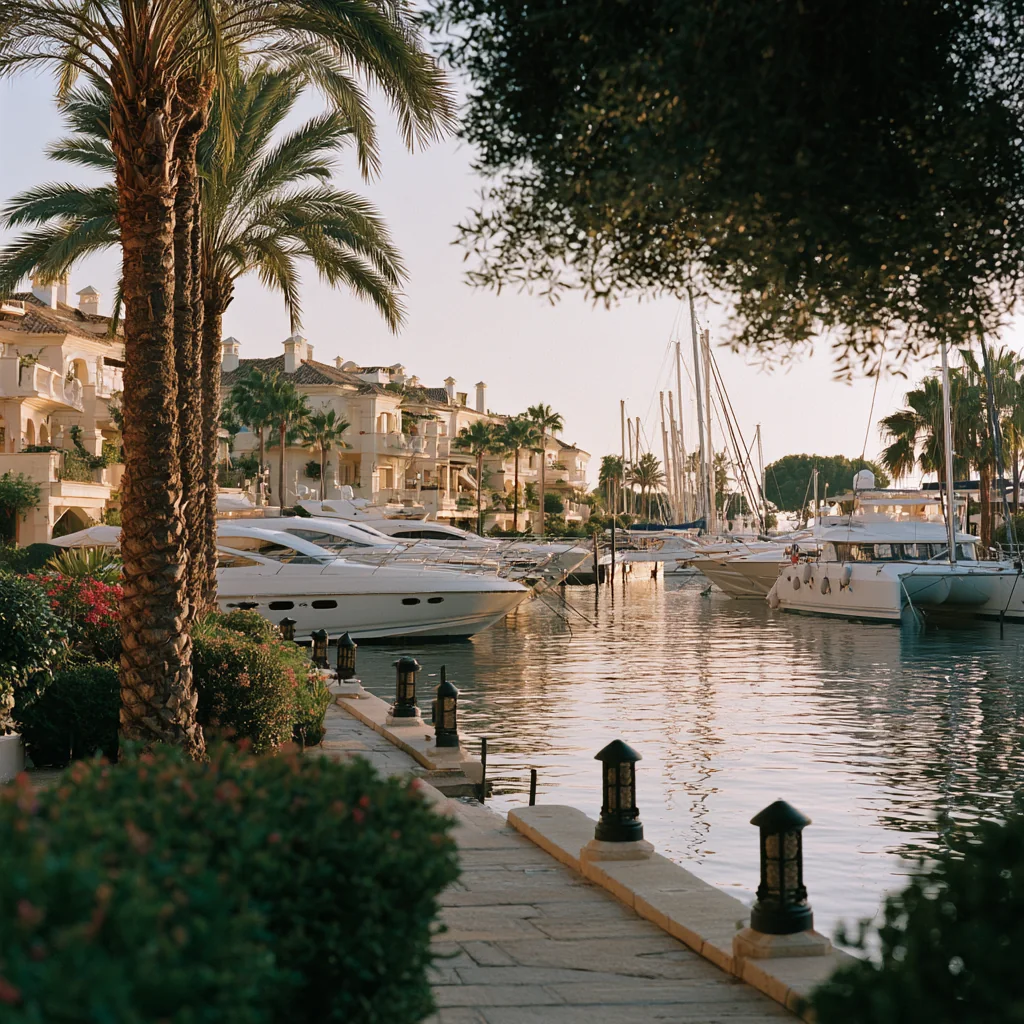
The permanent residents are overwhelmingly international. British, Irish, Scandinavian, and a growing number of American families have made Sotogrande their base, drawn primarily by one institution: Sotogrande International School.
The school that explains the community
Sotogrande International School (SIS) is the reason most families who have never heard of Sotogrande end up there. It is one of a small number of schools in Spain that consistently places students at the most selective universities in the UK and U.S., offers the IB Diploma Programme at the highest level, and has a truly international student body rather than a nominally international one. The school’s sports facilities, outdoor education programme, and the surrounding countryside (riding, sailing, golf, tennis, polo for those who develop an interest) create an educational environment that is difficult to replicate in an urban school.
For families making a long-term relocation to Spain on the Digital Nomad Visa, and for whom schooling quality is a primary constraint, SIS is a compelling argument for a location they would otherwise never have considered. The school does operate a waitlist, particularly for secondary school entry; the earlier you apply, the better your position.
The Gibraltar factor
Sotogrande is 20 minutes from the Gibraltar border. For most Digital Nomad Visa holders this is a footnote. For some, it matters significantly:
- U.S. citizens with UK connections: Gibraltar is a British Overseas Territory with UK financial services regulation, English law, and access to UK banking and investment products unavailable in Spain.
- Professionals with Gibraltar-based clients or employers: income from Gibraltar-based entities is foreign-source income for Spanish tax purposes, relevant to the DNV’s 20% Spanish-client rule.
- Practical convenience: Gibraltar has its own airport, direct flights to London Heathrow and other UK airports, and a different price point for some goods and services.
Gibraltar does not create any special tax status for Spanish residents living near the border. You are a Spanish tax resident and file Spanish taxes regardless of proximity to Gibraltar. Your gestor should be familiar with the cross-border situation; most gestors in the San Roque / La Línea area are.
What living here actually looks like
Sotogrande has no city center. It has a port, a few commercial strips in the residential areas, a supermarket (Spar), and a handful of restaurants and bars that function year-round. For serious shopping, you drive to San Roque (10 minutes), La Línea (15 minutes), or Algeciras (20 minutes), which has a proper commercial center. For significant city life (restaurants, culture, nightlife, professional services) Marbella is 45 minutes east and Cádiz is 90 minutes west.
This is not a complaint. People who choose Sotogrande know what they are choosing: space, quiet, greenery, and a community that is self-contained by design. The residential streets are tree-lined and unhurried. You can ride horses in the morning and be on a video call by 9am. You eat dinner outside most of the year. Your children walk to school through gardens. It is a very specific version of good life, and it is a wonderful one, if it is the life you want.
If it is not what you want (if you need urban energy, cultural density, anonymity, or professional services on your doorstep) Sotogrande will feel remote within a month.
Housing
The residential stock in Sotogrande is almost entirely detached villas and townhouses, with apartments concentrated in the port area and La Reserva. Long-term rental supply is limited. Many properties are owned by people who use them seasonally, and the permanent rental market is small relative to the sales market. Expect to spend time finding the right property and to sign a standard annual lease. Monthly rents for a 3-bedroom villa with garden start around €2,000–€2,800; quality 4-bedroom properties in the Kings & Queens area or near the polo fields are €3,500–€6,000. The port apartments are the most affordable and the most available.
Many Sotogrande arrivals consider purchasing from day one. The ownership market is deeper than the rental one. What that means for a visa holder is covered in renting vs. buying on the DNV.
Cost of living
- Rent (3BR villa, typical family property): €2,000–€3,500/month
- Groceries: €300–€450/month (Spar locally; larger shops in La Línea or Algeciras)
- Dining out: €15–€25/lunch, €40–€70/dinner at the port restaurants
- Transport: Car essential; budget €100–€150/month fuel and running costs for local and regional trips
- SIS school fees: €15,000–€22,000/year per child depending on year group
- Health insurance (DNV-qualifying): €80–€160/month per adult
- Total estimate (family of four): €5,000–€8,000/month including school
The cost structure here is different from other cities on this list. The rent-per-square-metre is competitive (you get significantly more space for your money than in Marbella or Barcelona) but the school fees and the necessity of a car change the total. Sotogrande is a sensible financial choice for high-income families who would be spending heavily on international schooling anywhere.
Run your numbers
Gross-to-Net Salary Calculator
What your U.S. salary actually leaves in your pocket each month living in Spain.
Is Sotogrande right for you?
Sotogrande is right for families with children for whom Sotogrande International School is the primary objective, people with income levels that comfortably support the full cost structure, and remote workers who actively want a rural-residential setting rather than a city. It suits people who have decided that their life in Spain will be built around family, outdoor space, and a close-knit international community, not around urban exploration.
It is wrong for single remote workers, people who need urban energy and professional services nearby, those on a budget, or anyone who would find the quiet isolating rather than restorative.
The people who stay in Sotogrande tend to stay for a very long time. That is usually a good sign.
Last updated: 27 September 2026.