Why Americans and Canadians choose A Coruña
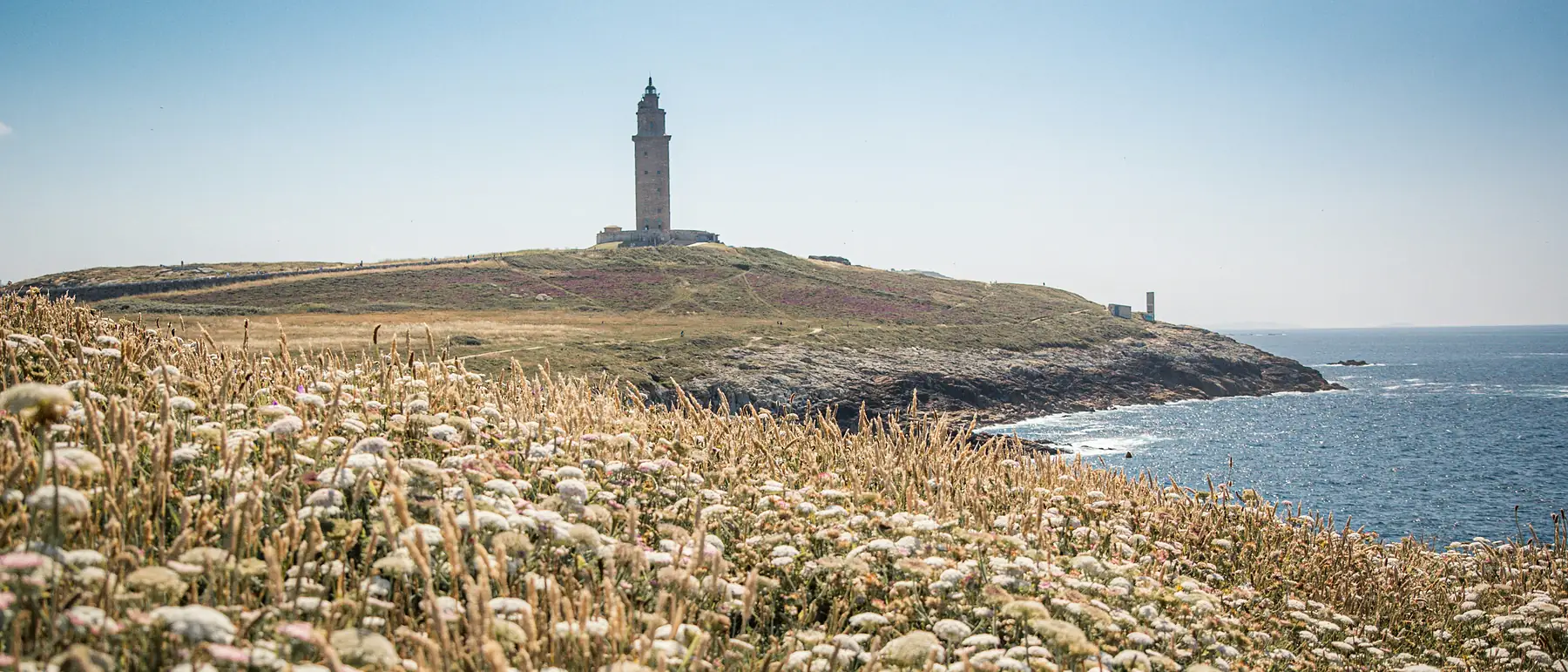
The city wraps around its peninsula. The seafront promenade runs past the Tower of Hercules and the Riazor and Orzán beaches, and from most of the center you reach the sea in a few minutes on foot. It is a working port, busy all year.
People come for the money and the calm. Rents run well below the Mediterranean coast, and daily costs follow. You still get a real city, with its own airport and a large teaching hospital, at a size you can mostly walk.
Few Americans live here. INE counted 334 U.S. citizens in the city on 1 January 2026, out of about 25,000 foreign residents. Some Spanish will help you settle in much faster.
Where to live in A Coruña
- Ensanche: The 19th-century grid in the middle of town. The most central, with the best shopping.
- Riazor and Orzán: The seafront along the Paseo Marítimo. The obvious pick if you want the beach on your doorstep.
- Pescadería and Centro: The glass galleries of the Marina, Plaza de María Pita and the San Agustín market.
- Cidade Vella: The old town on the headland.
- Matogrande and Elviña: Newer flats near the university, with easier parking.
- Os Mallos and Sagrada Familia: Residential and cheaper.
- Oleiros and Bastiagueiro: Coastal suburbs east of the city, with houses and beaches for families. You will need a car.
Cost of living in A Coruña
Numbeo, updated on 25 November 2026, puts everyday costs for one person at about €736 a month before rent. A realistic monthly budget for one remote worker:
- Rent (1BR, 50–70 m²): €550–€800/month. A one-bed in the center runs higher, about €925 on Numbeo
- Utilities (85 m² flat): about €165/month
- Home broadband and mobile: about €28 and €11/month
- City bus: €1.30 a ride in cash, €0.45 with the rechargeable Bono Bus card, and a monthly pass capped at €19.80 (Tranvías Coruña, November 2026)
- Cheap restaurant meal: about €13.50
- Coworking desk: median €170/month before VAT (workin.space, November 2026), from €135 in the old town
- Total (one person, rent included): about €1,300–€1,550/month, before coworking and health insurance
Finding a flat is the hard part. El Español reported in October 2026, from idealista data, that flats for rent fell 54% between mid-2018 and mid-2026 while relative demand rose 825%. Have your papers ready before you visit.
A budget like this leaves a wide margin above what the visa asks you to earn, set out in the income requirements guide. The one-off costs of the visa itself are in what the visa costs Americans.
Run your numbers
Gross-to-Net Salary Calculator
What your U.S. salary actually leaves in your pocket each month living in Spain.
A Coruña weather: how much it really rains
AEMET’s 1981–2010 normals give A Coruña an average of 14.8 °C (59 °F). August highs reach about 23 °C (73 °F) and January lows stay around 8 °C (46 °F). It rains about 1,014 mm (40 inches) a year on roughly 130 days, mostly from October to April, with long grey stretches. Summers are short and fresh, and the Atlantic stays cold for swimming even in August. Bring a proper raincoat. For warm water and long beach days, Alicante or Málaga suit you better.
Flying home to the U.S. and Canada
A Coruña airport (LCG) is in Culleredo, just outside the city. Aena’s current list has direct flights to Madrid, Barcelona, several other Spanish cities, the Canary Islands, Geneva and Milan. Nothing flies to London, Paris or Lisbon, and nothing to North America.
In summer 2026, United flew Newark to Santiago de Compostela three times a week from late May, a seasonal route. Check United’s schedule for next summer before you plan around it. The rest of the year, most trips home are one stop through Madrid. For passports and other consular services, Americans and Canadians both use their embassies in Madrid.
Schools and healthcare
English-language schools, with 2026/2027 fees from the International Schools Database:
- Obradoiro School: IB and Spanish curriculum, ages 3 to 18, €6,220–€8,700 a year
- Coruña British International School: English National Curriculum, €6,205–€9,505 a year
- British Royal School: British curriculum, €4,190–€6,190 a year
In Galician public schools, part of the subjects are taught in Galician, in a balanced split with Spanish. More on moving with children in the family guide.
Public care centers on the CHUAC, the university hospital group of the Galician health service. Private hospitals include Quirónsalud A Coruña, HM Modelo and San Rafael. If you work on a U.S. Certificate of Coverage, or its Canadian equivalent (see the guide for Canadians), you need private insurance from an insurer authorized in Spain. The health insurance guide explains what qualifies.
Taxes in Galicia
Galicia is common territory, so you file with the State tax agency, the AEAT. That matters if you are also weighing the Atlantic cities further east: Bilbao and San Sebastián have their own Basque tax systems.
Beckham’s flat 24% on work income up to €600,000, your foreign salary included, is available in A Coruña if you qualify. It does not apply in the Basque Country or Navarre. It covers employees, not most freelancers, and as a U.S. citizen you still file with the IRS. Whether it fits your case is in the Beckham guide.
Filing the Digital Nomad Visa from A Coruña
The UGE is a single national unit, so a file from A Coruña goes to the same place and takes the same time as one from anywhere else, around 20 business days. If you are already in Spain, file with time to spare inside your 90 Schengen days. The steps, in order, are in how to apply, step by step.
Padrón. You register your address with the Concello da Coruña, online or in person with an appointment, both through sede.coruna.gal. You need your passport and proof of address. A lease counts if it runs more than six months, with your latest rent receipt. Before you sign, check that the landlord lets you register. The rest is in the empadronamiento guide.
TIE. After approval you book the fingerprint appointment for your TIE on the Government’s cita previa site, province A Coruña, within the deadline in your resolution, normally one month. Any police office in the province that issues cards will do, so take the first free slot, not the nearest one. You collect the card in person a few weeks later. To travel before then, read travel before the TIE.
A Coruña, Santiago or Vigo?
Santiago de Compostela, with about 101,500 people, is smaller and has the region’s bigger airport, with the Newark flight. Vigo, with about 297,000, is the largest city in Galicia. Everything on this page about the visa applies to both.
If you would like a few weeks in the Galician countryside first, Galicia has Spain’s most complete rural coliving scene. The rural Spain guide covers the houses and the Xunta’s Fixar program.
Is A Coruña right for you?
A Coruña suits you if you want the sea and low costs and don’t mind rain. It works best if you speak some Spanish and enjoy being one of few Americans in town. If you are retiring from the U.S., the city works just as well on the Non-Lucrative Visa.
If you need sun, look south. Málaga and Valencia get far more of it, and Málaga has United’s summer nonstop to Newark. The Canary Islands stay mild all winter, and Tenerife has winter nonstops to Toronto and Montreal. Every option sits side by side in the best Spanish cities for remote workers.
Living in A Coruña does not change the visa. Start with the free assessment and I will tell you within 24 hours whether your profile fits and what to order first.
Questions about living in A Coruña
Yes, if you want the sea and low costs and can live with a lot of rain. Rents sit well below the Mediterranean coast and you can walk most of the city. Few Americans live here, 334 according to INE in January 2026, so some Spanish makes settling in much easier.
A one-bedroom of 50 to 70 m² rents for about €550 to €800 a month, from idealista’s June 2026 asking price of €11.1 per m². Numbeo puts everyday costs for one person at about €736 a month before rent, so a single remote worker spends roughly €1,300 to €1,550 a month, before coworking and health insurance.
About 1,014 mm (40 inches) a year on roughly 130 days, according to AEMET’s 1981–2010 normals. Most of it falls from October to April. Summers are short and fresh, with August highs around 23 °C (73 °F), and the Atlantic stays cold for swimming.
No. A Coruña airport flies to Spanish cities, the Canary Islands, Geneva and Milan. In summer 2026 United flew Newark to Santiago de Compostela three times a week. The rest of the year, most trips home connect through Madrid.
Yes. The file goes to the UGE, a single national unit, so the documents and the timeline of around 20 business days are the same anywhere in Spain. Locally, you register on the padrón with the Concello da Coruña and book your TIE fingerprints in A Coruña province after approval.
Last updated: 28 November 2026.